Oak Processionary Moth OPM Removal in London
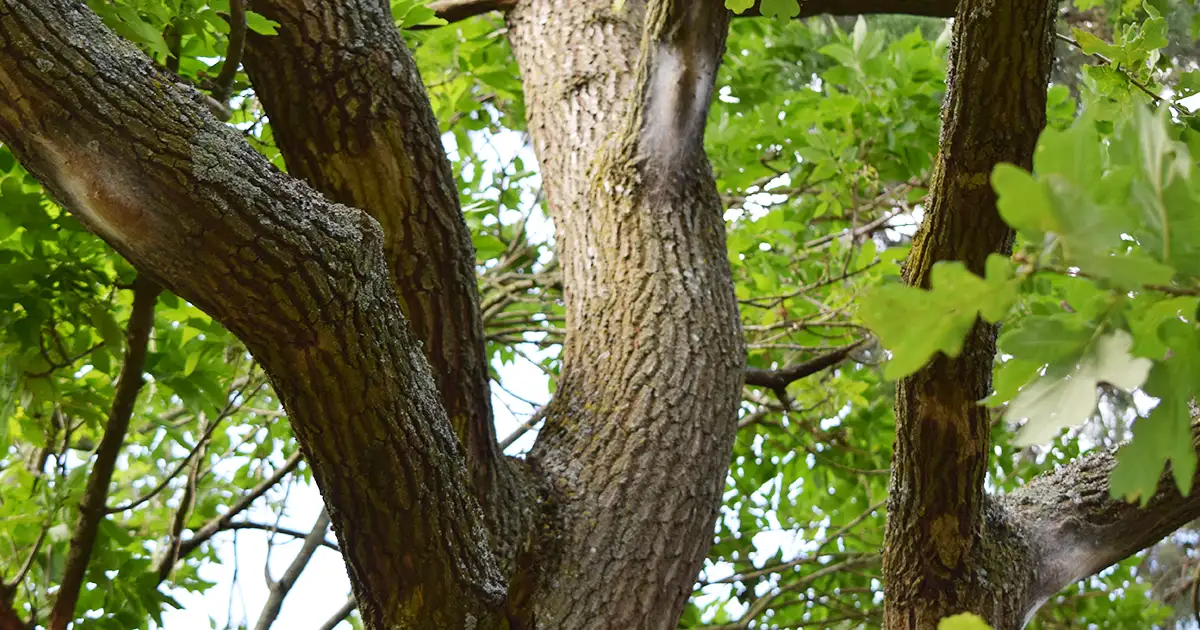
GraftinGardeners provide safe, professional OPM (Oak Processionary Moth) removal in London. Our NPTC-qualified, fully insured arborists remove OPM nests and caterpillars from oak trees across Greater London, following the strict control and disposal guidelines set by the UK Government and Forestry Commission.
Oak Processionary Moth is a serious pest and a genuine health hazard, and London is the centre of the UK outbreak. If you think your oak tree has OPM, keep your distance and contact us straight away on 0208 123 7653.
Do not attempt to remove or disturb an OPM nest yourself. The caterpillars and nests are covered in tiny, toxic hairs, and removal must be carried out only by a trained professional with the correct PPE.
Oak Processionary Moth Removal Across London
At GraftinGardeners, we can confirm whether OPM is present from clear photos, a description, or an on-site visit, then remove the nests and caterpillars safely. We carry £10 million in public liability insurance, hold ConstructionLine Platinum, CHAS, SSIP, and Trading Standards accreditation, and are rated 5 stars by over 1,000 clients on Checkatrade, Trustpilot, Google, and Which? Trusted Traders.
We provide both domestic and commercial OPM removal throughout North, South, West, and Central London, working in accordance with British Standard BS3998 and the Forestry Commission's removal and disposal procedures.
What Is OPM (Oak Processionary Moth)?
Oak Processionary Moth (Thaumetopoea processionea) is a non-native pest whose caterpillars feed almost exclusively on oak trees, stripping the leaves and leaving the tree weakened and exposed to other threats. The caterpillars move nose-to-tail in a distinctive procession, which is how the moth gets its name.
OPM was first identified in London in 2006 and is now established across much of the capital and parts of the surrounding South East. Because the moths spread from tree to tree, London's many mature oaks make the city the focal point of the UK infestation. You can check the Forestry Commission's live OPM distribution map to see your area's status.
How to Identify OPM Caterpillars and Nests in London
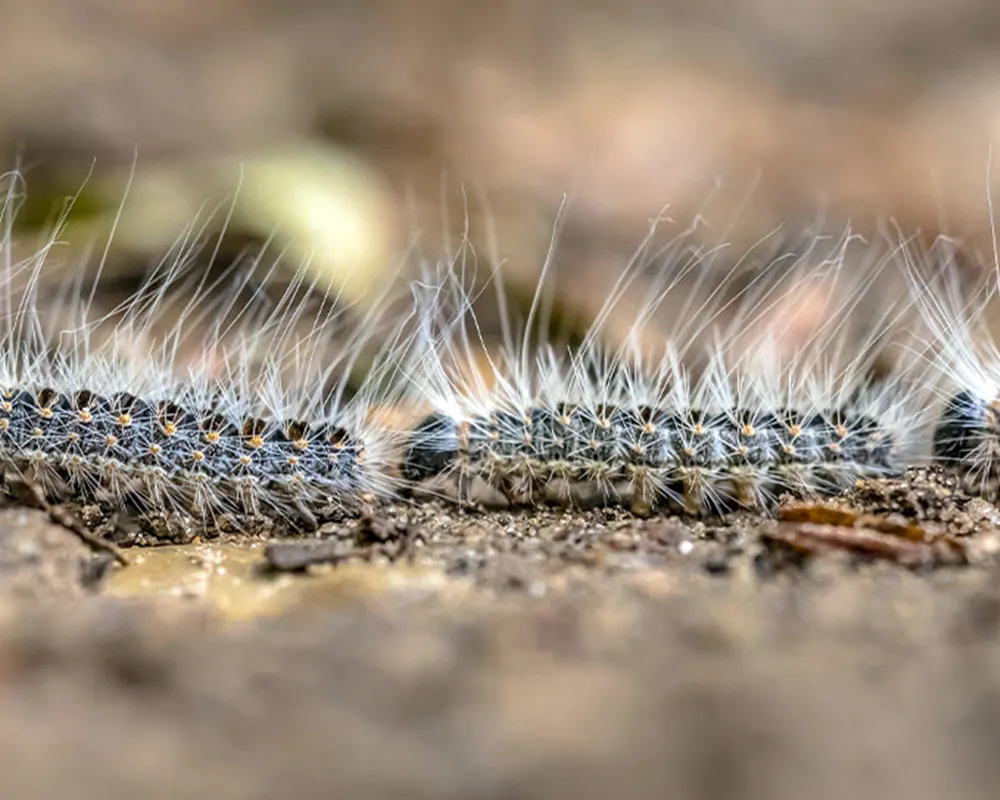
OPM Caterpillars
OPM caterpillars are easiest to spot in late spring and early summer. Look for:
Oak trees only: they feed almost exclusively on oak, occasionally moving to neighbouring broadleaved trees if oak leaves run short.
Nose-to-tail processions: they move in arrowhead-shaped processions along trunks, branches and sometimes the ground.
Black heads, grey bodies: covered in long white hairs, with much shorter, almost invisible toxic hairs.
Size: around 2mm when they emerge in spring, growing to about 2cm fully grown; the irritating hairs develop from around 1cm.
Timing: active and visible mainly in May, June and July.
OPM Nests
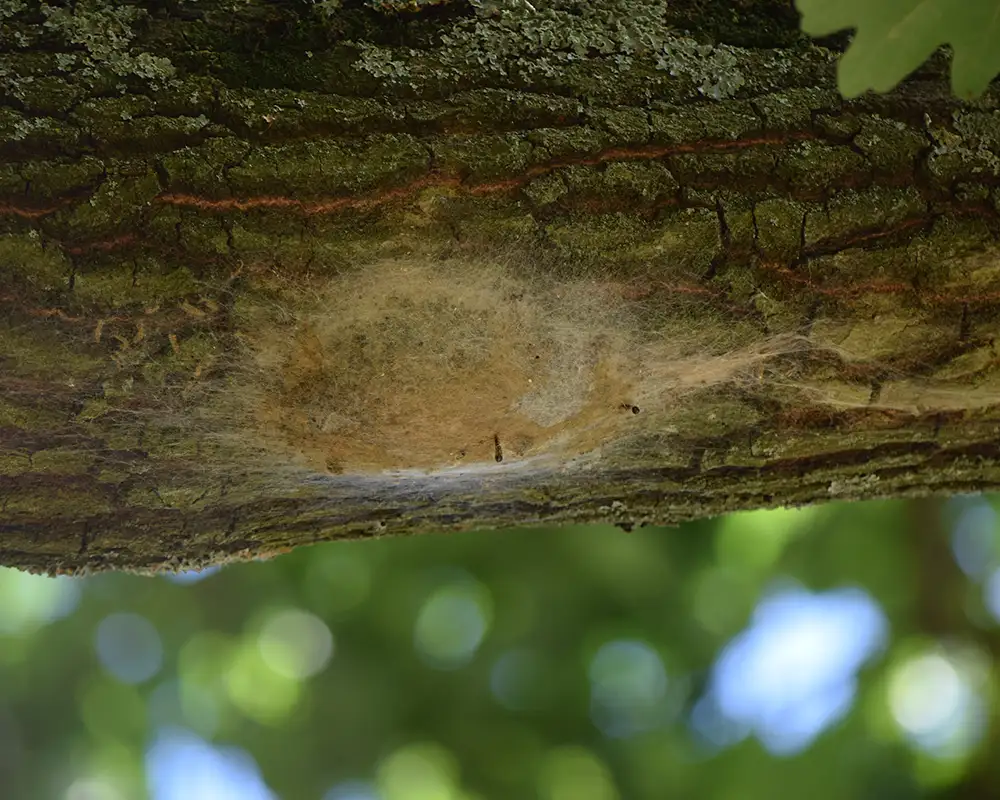
OPM nests appear from early summer on the trunks and branches of oak trees. Key features:
Location: built on oak trunks and branches at any height, from ground level to the crown; rarely on other trees, walls or fences.
Appearance: dome or teardrop-shaped silken-white webbing, ranging from golf-ball to rugby-ball size, with white silken trails along the branches.
They discolour: nests soon turn brown and become harder to spot against the bark.
They persist: nests can stay attached for many months after the moths emerge, and can fall to the ground, where the hairs remain hazardous.
If you are unsure whether what you have found is OPM, check the Forestry Commission's guide to species commonly confused with OPM before reporting it.
Why OPM Is Dangerous
Dangers to People and Animals
OPM caterpillars and nests carry thousands of tiny toxic hairs containing a protein called thaumetopoein. Contact with these hairs, by brushing past an infested oak, or when wind carries them from nearby trees, can cause itchy skin rashes, eye and throat irritation and, in some cases, breathing difficulties. Repeated exposure can worsen reactions. The greatest risk is from May to July, but residual hairs in old nests remain hazardous all year. Children, pets, livestock and anyone working near infested oaks are most at risk.
Dangers to Trees
By stripping the leaves, OPM caterpillars reduce an oak's ability to photosynthesise. Heavy infestations can defoliate a tree, leaving it weaker and more vulnerable to other pests, diseases, and drought, and, over time, less structurally stable.
OPM and the Law in London: Your Responsibilities
As most of Greater London sits within the OPM "established area," landowners are legally responsible for managing OPM on their own trees. You must report any sighting to the Forestry Commission via TreeAlert, and you may be issued a Statutory Plant Health Notice (SPHN) requiring you to act. In some buffer-zone areas the Forestry Commission funds treatment, but across most of London the cost and duty fall to the tree owner. We can advise on your obligations and handle the work for you.
When Is OPM Treated and Removed?
Timing matters. There are two main control windows:
Spring spraying (around April–May): young caterpillars can be treated with a targeted biological spray (Bacillus thuringiensis) before they develop their toxic hairs, as part of the wider control programme.
Nest removal (late June to early August): once caterpillars retreat into the nests to pupate, the nests are physically removed and disposed of. This is the most reliable method for garden and street oaks.
Our arborists will assess your oak and recommend the right approach and timing for your situation.
How We Remove OPM Safely
OPM removal is a hazardous, specialist operation. Our trained team works in full protective equipment and follows Forestry Commission procedures: nests and caterpillars are carefully removed and sealed, and the affected material is double-bagged and taken to a licensed facility for incineration. We take every precaution to protect our crew, your household, the public and surrounding wildlife, and our methods avoid unnecessary use of pesticides wherever possible.
Arrange a Free OPM Removal Quote
Why Choose GraftinGardeners for OPM Removal in London?
We are a family-run firm of NPTC-qualified, fully insured London tree surgeons with over 15 years' experience and multiple teams covering the whole capital. We hold £10 million public liability insurance, work to British Standard BS3998, and follow Forestry Commission guidance for OPM control and disposal. With over 1,000 verified 5-star reviews, you can trust your oaks, and your family's safety, to us.
For wider tree care and consultancy, see our fully insured arborist and tree surgeon services, all available across London.
OPM Removal London FAQs
Can I remove an OPM nest myself?
No. OPM nests and caterpillars are covered in toxic hairs that cause rashes and breathing problems. Removal should only be done by a trained professional in full PPE. Keep people and pets well away and call a specialist.
How much does OPM removal cost in London?
It depends on the number of nests, the size and accessibility of the oak, and the height of the nests. Every job is assessed and quoted individually, with a free, no-obligation written quote before any work starts.
When is the best time to remove OPM?
Young caterpillars can be sprayed in spring (around April–May), while nests are physically removed from late June to early August once the caterpillars pupate. We will advise the best option for your tree.
Do I have to report OPM?
Yes. Sightings should be reported to the Forestry Commission via TreeAlert. If your tree is in the London established area, you are responsible for managing OPM and may receive a Statutory Plant Health Notice.
Which areas of London do you cover for OPM removal?
We cover North, South, West and Central London and the surrounding areas, for both domestic and commercial clients.
Report and Get Help With OPM in London
If you suspect your oak trees have OPM, be sure to follow the Forestry Commission's advice: spot it, avoid it, report it. Report via TreeAlert, keep clear of the tree, and contact us for safe, professional removal.
Call 0208 123 7653 or request a free quote.