What Months Can You Not Cut Trees in the UK?
- Date: 09/Oct/2026
- Comments: 0
Avoid cutting trees between March and August, the bird nesting season. No law bans tree work in those months, but damaging an active nest is an offence under the Wildlife and Countryside Act 1981, so any spring or summer cutting starts with a check for nests. For the tree itself, most species are best pruned while dormant, from November to February.
Not sure whether your tree can be cut this month? Call 0208 123 7653 or request a free quote. Our NPTC-qualified tree surgeons work across London and Surrey all year round and will tell you plainly if a job is better left until the right season.
What Months Can You Not Cut Trees?
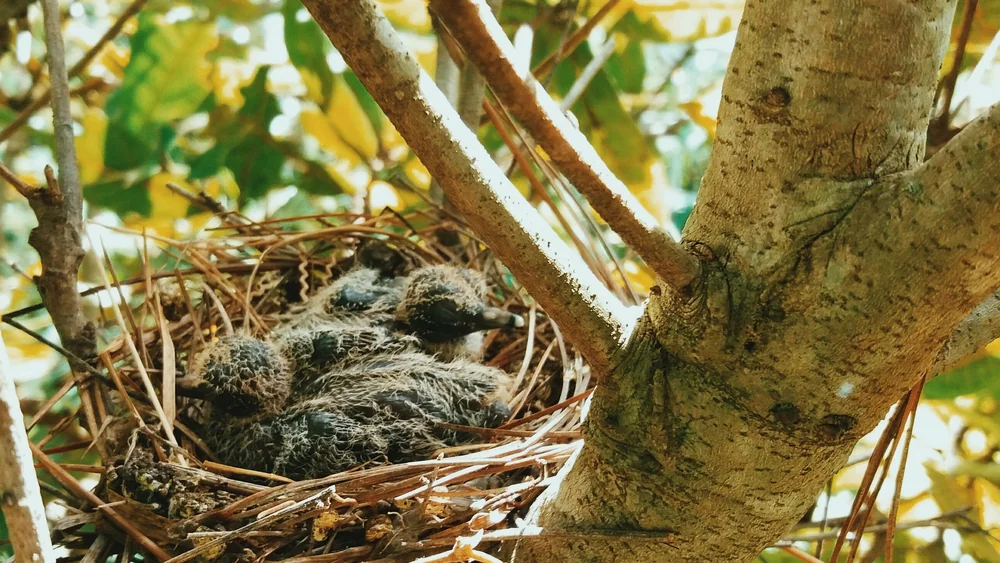
March to August. That is the core bird nesting season in the UK, and the RSPB stretches it to September, recommending that hedges and trees are cut only between 1 September and the end of February. In a London garden that means Robins, Wrens, Blackbirds and Woodpigeons nesting low in hedges, climbers and small trees from the first mild days of March.
Treat the dates as a guide. Mild winters bring nests in February and some birds are still feeding chicks in September, which is why the check matters more than the calendar.
Is it actually illegal?
Not in the way most people think. The Wildlife and Countryside Act 1981 protects every wild bird, nest and egg, and makes it an offence to intentionally damage or destroy a nest while it is in use or being built, at any time of year. It does not say “no tree work from March to August”. What matters is whether a nest is in use, so a cut in May with nothing nesting is legal, and a cut in October that goes through a late brood is not. Gov.uk lists cutting trees, bushes and hedges as one of the activities most likely to break the law, and the penalty is an unlimited fine and up to six months in prison for each offence.
A Tree Preservation Order makes no difference here. Council consent to prune a protected tree is not permission to disturb a nest in it.
How we check a tree before cutting
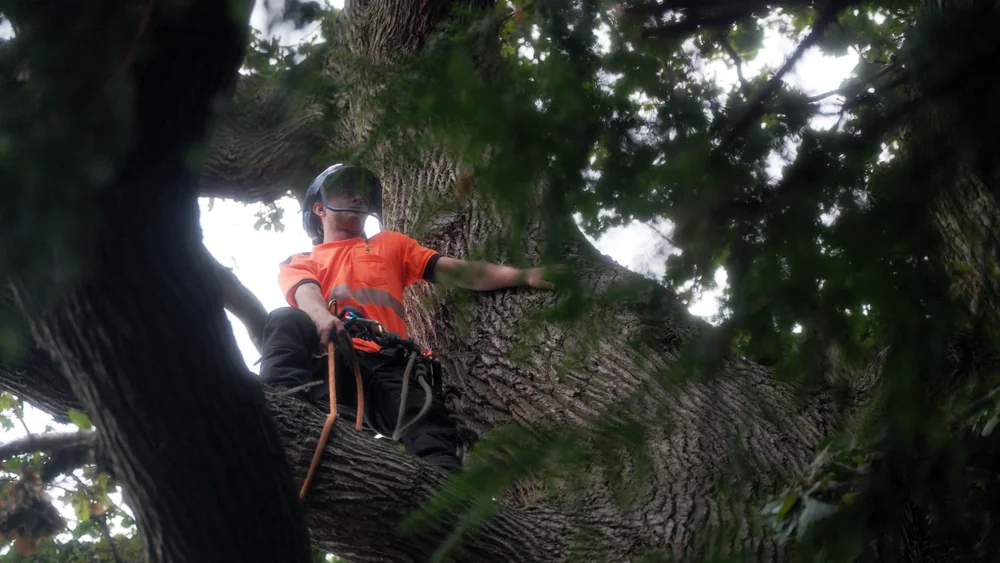
We do not down tools for six months, and nor does any competent contractor. Before a cut is made between March and September we inspect from the ground and, on a dense canopy, from the climb, looking for nest structures, adults returning to one spot, and the calls of chicks. If a nest is in use, that part of the tree is left and the job is reduced or rescheduled. BS 3998, the British Standard for tree work, expects exactly this, and so does every reputable contractor’s own method statement. If a contractor offers to take a tree down in May without mentioning birds, that tells you something about the contractor.
Tree Cutting Month by Month in London
For most deciduous trees the window is November to February. The table below shows how that plays out across the year for a typical London garden, with the species that break the rule.
| Month | Can you cut trees? | What to know |
|---|---|---|
| January | Yes | Fully dormant. Birch, maple and walnut start to bleed sap from now, so those are better done before Christmas or in late summer. |
| February | Yes, with a check | Still dormant, but early nests appear in mild years. Check hedges and dense shrubs before cutting. |
| March | Avoid | Nesting season begins on 1 March. Sap is rising and the tree is spending its reserves on new leaves. |
| April | Avoid | Peak sap rise and nesting. Wounds made now are the most vulnerable to pests and disease. |
| May | Avoid | Peak nesting. Oak processionary moth caterpillars are active on London oaks. |
| June | Mostly avoid | The window for cherries, plums and magnolias, pruned after flowering. Nests and OPM still active. |
| July | Mostly avoid | Cherries, plums, walnuts and magnolias. Check for drought stress before any heavy pruning. |
| August | Mostly avoid | Late nests still active. Birch, hornbeam and poplar can be pruned from late August. Evergreens are fine. |
| September | Yes, with a check | Hedge cutting resumes from 1 September. Look for late broods. Heavy work on deciduous trees is better left until the leaves are down. |
| October | Yes, once leaves fall | Trees are drawing nutrients back from their leaves. Wait for leaf fall for major work. Japanese maples are done after leaf fall. |
| November | Yes | The main pruning season opens. Structure is visible and disease pressure is low. |
| December | Yes, best month | Full dormancy. The RHS advises finishing bleeders before Christmas, as sap rises earlier than you would think. |
Bats Are Protected All Year
Unlike birds, bats have no season. Every UK bat species and every roost is protected under the Wildlife and Countryside Act 1981 and the Conservation of Habitats and Species Regulations 2017, and a roost is protected whether or not bats are in it at the time. Damaging one without a Natural England licence is an offence in any month.
Cavities, split limbs, loose bark, woodpecker holes and dense ivy are all potential roosts, and they are common in London’s older trees. Felling or heavily reducing one can need a bat survey first. The Bat Conservation Trust trains arborists to carry out the initial scoping survey, and where roost features are found the work waits for an ecologist.
When Cutting Is Bad for the Tree
Spring: the sap is rising
The Arboricultural Association advises against tree work in spring, when sap is moving up to flush the new leaves. Wounds made then are more open to pests and disease, and the tree is spending its reserves on growth rather than on sealing cuts. For some species the problem is visible. Birch, maple, walnut, hornbeam, beech, poplar, lime and magnolia bleed sap from cuts made in late winter and spring. The RHS says bleeding is usually harmless but can weaken a tree if prolonged, and there is no way to stop it once started.
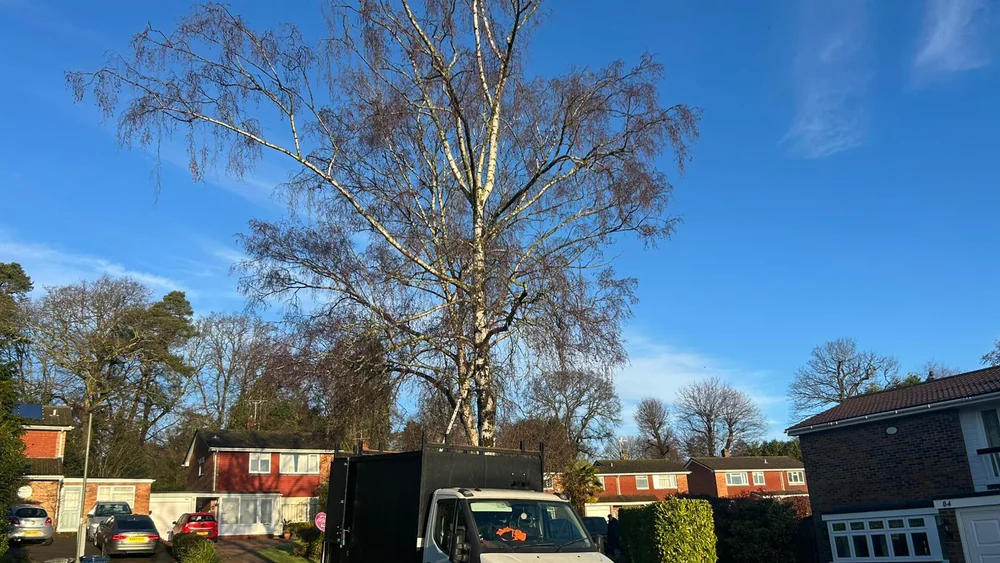
The silver birch below was pruned on a clear winter morning while fully dormant. Leave a birch like this until late February and the same cuts could run with sap for weeks.
Summer: heat and drought
Heavy pruning in a hot, dry summer adds stress to a tree already short of water, and the Arboricultural Association specifically advises against pruning during drought or extended hard frost. After the 2026 drought, many London trees are carrying that stress into autumn, and crown reductions that would normally be routine are worth deferring until the tree has recovered. The exception is safety work, so a cracked limb over a pavement comes off when it is found.
Early autumn: the tree is drawing back
The Arboricultural Association also advises against cutting in early autumn, while the tree is pulling nutrients out of its leaves into the trunk and roots for winter. Cut then and it loses part of that reserve before it is banked. Once the leaves are down, from late October or November, the best window of the year opens.
Winter: cherries, plums and spring flowers
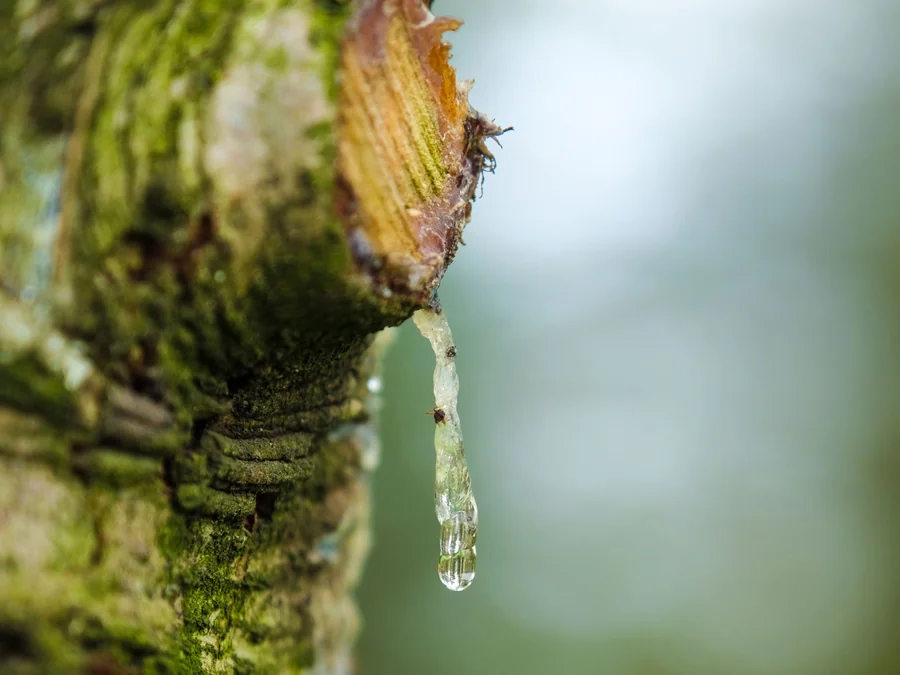
Cherries, plums, apricots and ornamental flowering cherries, all in the genus Prunus, should not be pruned in winter. Damp winter air carries the spores of silver leaf, a fungal disease that enters fresh cuts and kills branches, and of bacterial canker. The RHS and the Arboricultural Association both put Prunus pruning in summer, soon after flowering or in mid-summer, when wounds dry and seal quickly.
The photo below shows what a cherry does with a wound. Prunus trees respond to cutting by oozing gum, which sets into hard amber beads and tells you the tree is under stress and its defences are open.
Magnolias, ornamental cherries and lilacs set next spring’s flower buds the previous summer. Prune them in winter and the buds go in the chipper. They are cut straight after flowering.
Oaks in London: Forget Oak Wilt, Think OPM
Search this question and you will find advice, including Google’s own AI summary, warning against pruning oaks in summer because of oak wilt. That is American advice. Oak wilt is a disease of the United States and, according to Forest Research, has never been found in the UK.
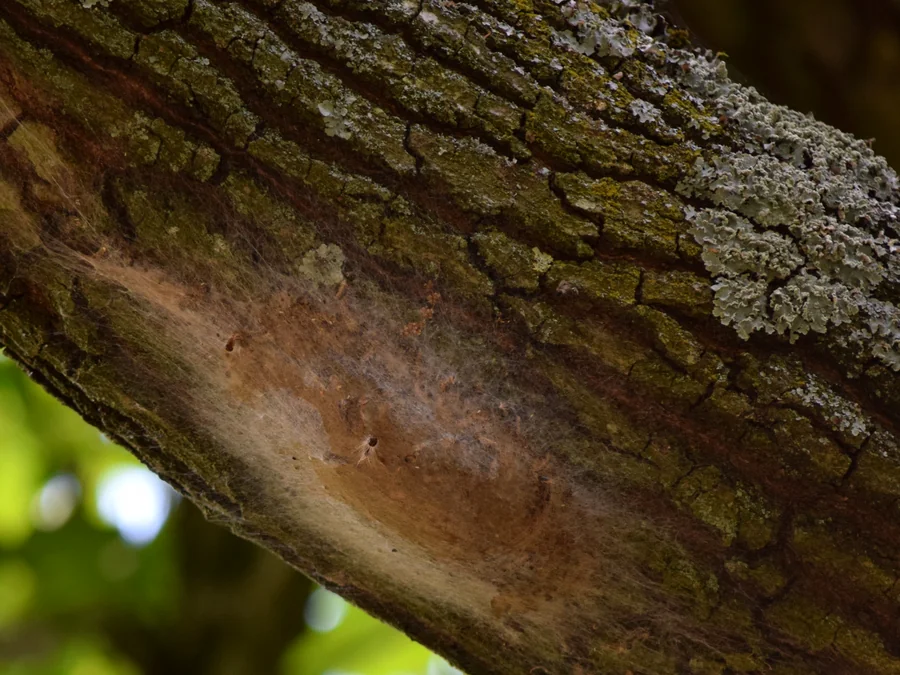
The reason to be careful with a London oak in summer is oak processionary moth. It is established across most of Greater London, its caterpillars are active on oaks from May to July, and their hairs cause rashes, eye irritation and breathing problems. The hairs collect in the silken nests on trunks and branches and stick to ropes, saws and clothing, so pruning an infested oak in early summer without the right precautions spreads them. Between May and July every London oak job starts with a check for nests, and infested trees are handled by a crew trained and equipped for OPM removal. Otherwise, oaks are pruned in winter like most deciduous trees. The nest below is one we photographed on an oak in Alexandra Park at the end of May.
Best Months to Prune by Species
| Tree | Best months | Avoid | Why |
|---|---|---|---|
| Most deciduous trees (oak, ash, plane, hawthorn) | November to February | March to August; early autumn | Nesting season, sap rise, nutrient withdrawal |
| Birch, hornbeam, beech | Late summer to mid-winter | Late winter and spring | Heavy sap bleeding |
| Maple | After leaf fall, before January; snakebark maples late summer | Late winter and spring | Heavy sap bleeding |
| Walnut | Mid-summer, or before mid-winter | Late winter and spring | Heavy sap bleeding |
| Poplar | Late summer or early autumn | Late winter and spring | Heavy sap bleeding |
| Cherry, plum, other Prunus | Mid-summer, or soon after flowering | October to March | Silver leaf, bacterial canker |
| Magnolia | Early to mid-summer, after flowering | Winter | Bleeding and lost flower buds |
| Apple, pear | November to February for free-standing trees; August for trained forms | Spring, in blossom | Dormant pruning sets the shape; cutting in blossom loses the crop |
| Evergreens and conifers | Late spring to summer | Deep winter | Frost damage to fresh cuts |
| Hedges | September to February | March to August | Nesting birds |
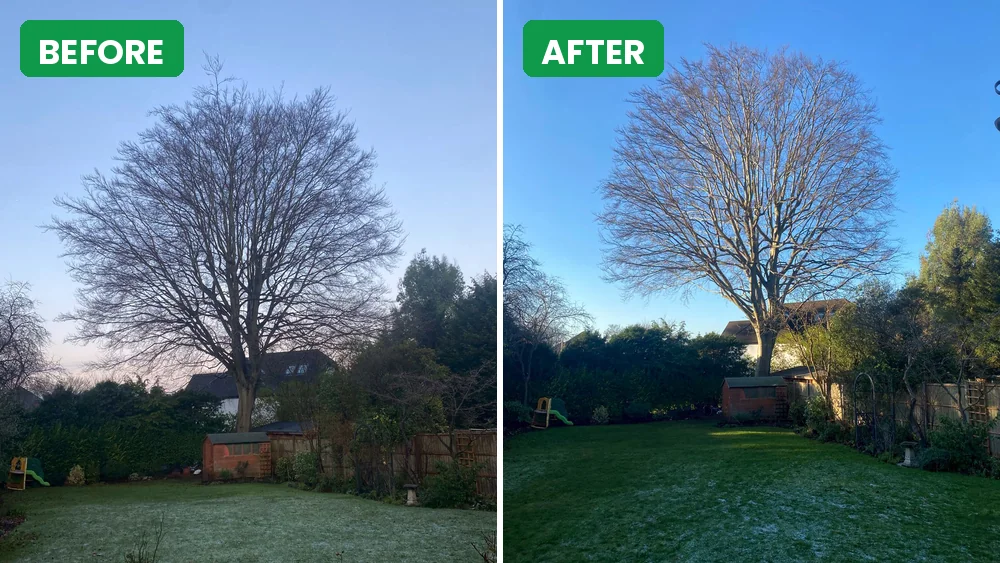
The beech below, in a Putney garden, was crown reduced on a frosty winter morning while fully dormant, which is the window for a beech as it bleeds if cut once the sap starts to rise.
Permission Can Matter More Than the Month
For many London trees the thing that stops you cutting is paperwork, not the calendar. A tree with a Tree Preservation Order needs written council consent for anything beyond removing dead wood, and the application takes up to eight weeks. A tree in a conservation area needs six weeks’ notice. Felling more than five cubic metres of timber in a quarter outside a garden needs a Forestry Commission licence. There is no seasonal element to any of them, but a late application can push a job out of its ideal window. For protected trees you want pruned in winter, apply in September.
Dangerous Trees Are the Exception
A split limb over a road, a tree leaning after a storm or a dead stem above a playground is dealt with when it is found, in any month. The bird law exempts work that cannot reasonably be avoided, and TPO rules allow urgent work on dangerous trees with notice to the council as soon as practicable. Call us for emergency tree work and we will make it safe, check for nests and roosts as we go, and leave any non-urgent pruning for the right season.
Frequently Asked Questions
Is it illegal to cut trees between March and August in the UK?
No. There is no law banning tree work in those months. It is illegal under the Wildlife and Countryside Act 1981 to damage or destroy an active bird’s nest at any time of year. Because most nests are active between March and August, work in those months must be preceded by a careful check, and stopped if a nest is found.
Can a tree surgeon cut my tree during nesting season?
Yes, if a proper inspection finds no active nests in the parts of the tree being worked on. A professional will check from the ground and from the climb before cutting, and will leave any section with a nest in use. If the tree is full of nests, the job is rescheduled for September or later.
Which trees should never be pruned in winter?
Cherries, plums and other Prunus species, because winter cuts let in silver leaf disease. Spring-flowering trees such as magnolia and ornamental cherry, because winter pruning removes next spring’s flower buds. Birch, maple, walnut and poplar are best cut before mid-winter or in late summer, because they bleed sap heavily once it starts rising.
Can I cut down a tree in my garden in summer?
Legally, yes, provided there are no active bird nests or bat roosts in it, and provided it is not protected by a Tree Preservation Order or in a conservation area, in which case you need council consent first. For the tree’s sake, felling is fine at any time of year. Heavy pruning of a tree you intend to keep is better left until it is dormant.
Do I need permission to prune a tree in London?
Only if the tree is covered by a Tree Preservation Order or stands in a conservation area, and a surprising number of London trees are. Check with your council’s tree officer before any work. A TPO application takes up to eight weeks and a conservation area notice six weeks, so apply in early autumn if you want the work done in winter.
Book Tree Work at the Right Time of Year
If you are unsure whether your tree should be cut this month, send us a photo or book a free visit. Our NPTC-qualified tree surgeons carry out tree pruning and tree felling across London and Surrey all year round, check every tree for nesting birds and bat roosts before we start, and will tell you plainly if a job is better left until the season is right. Call 0208 123 7653 or request a free quote.
Written by Joseph Blackwell ND Arb · Arboricultural Consultant · GraftinGardeners Ltd · October 2026
Article Source: https://www.graftingardeners.co.uk/what-months-can-you-not-cut-trees/