What Is the Cheapest Time of Year for Tree Removal?
- Date: 27/Nov/2026
- Comments: 0
With over 15 years’ experience owning a tree company in London, I can safely say the cheapest time of year for tree removal is usually January and early February. The arboriculture industry routinely goes quiet straight after New Year, so companies tend to price more keenly to keep their teams working and can usually book you in within days. The savings are real but modest, and despite what you may see online, no reputable firm offers a genuine winter discount.
I’ve seen articles suggest clients should expect winter savings of 20 to 30%, but in reality, with the ever-increasing costs involved in completing the work, such as fuel, labour, insurance and tax, no tree company could offer that kind of genuine discount without suffering a loss or cutting some serious corners.
If you’re looking to have a tree removed, call 0208 123 7653 or request a free quote. Our NPTC-qualified tree surgeons remove trees across London and Surrey year-round, and you’ll get a competitive, fixed and free written quote whatever the month.
The Reasons Why Tree Removal Can Be Cheaper in January
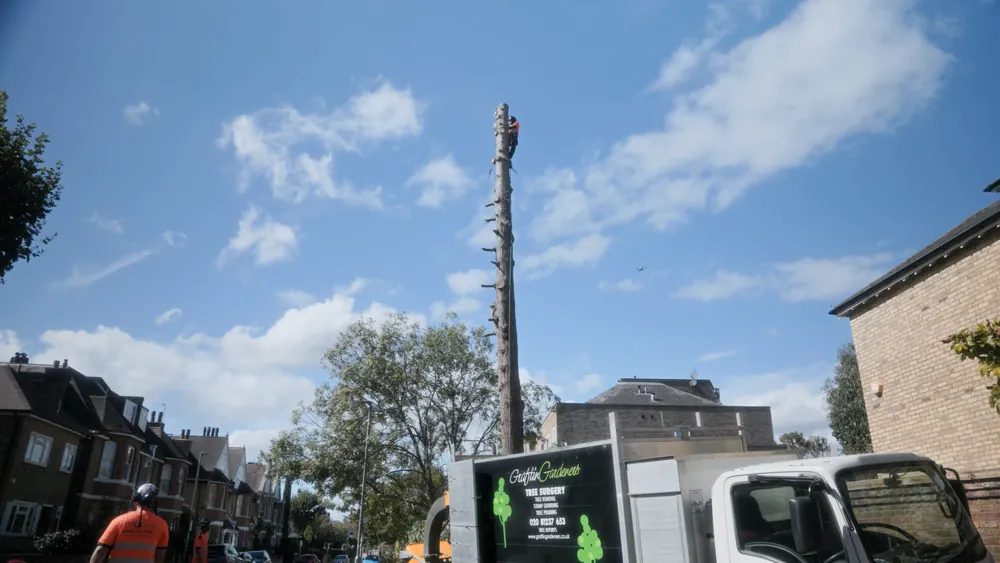
January is usually the quietest month for tree surgeons, and with crew wages and finance on vehicles and equipment still needing to be paid, most tree companies would rather take on a job at a slightly lower margin than have a team sat at home with nothing booked in, so quotes in January tend to be about as competitive as they get.
From my experience, and discussions with others within the industry, the phones go quiet after New Year for at least a couple of weeks. Most people have spent more than they meant to over Christmas, hardly anyone goes out into the garden when it’s cold and getting dark by half four, and with the good weather still feeling months away, getting a tree looked at just isn’t high on anyone’s list until spring starts to feel close.
December is quiet as well, although that’s more down to the tree companies themselves, as a lot of them will push any non-urgent enquiries into the new year so their staff can have time off over Christmas and New Year and so they’re not upsetting the neighbours with chainsaws and a chipper going in a residential street over the festive period. Emergency tree work still gets done, of course, and so does work that’s away from people’s homes, such as site and land clearances.
How Busy Tree Surgeons Are in London, Month by Month
I’ve used my personal experience and industry knowledge to create a rough guide on how busy most London tree surgeons are likely to be month by month. While I created this guide for London, it can also help you understand what drives pricing throughout the UK. September, October and early November are generally the busiest months, in late November and December things start to wind down, and January and early February are the quietest before demand picks up again from mid-February. The summer school holidays are the next quietest spell, as you can see in the table below.
| Month | How busy the trade is | What that means for a removal quote |
|---|---|---|
| January | The quietest month | Usually the most competitive quotes and the shortest wait of the year, if your job can wait until then. |
| February | Quiet until mid month | Early February still prices well. From mid month enquiries pick up as spring gets closer and the pruning window for most species starts to close. |
| March | Busy | Better weather brings people back into their gardens. Nesting season starts, so removals go ahead after a check for nests. |
| April | Busy | Spring demand is in full swing, so expect normal rates and to book a little further ahead. |
| May | Busy | Steady demand through the growing season, with nest checks before any work. |
| June | Busy in term time | Demand stays steady until the schools break up. |
| July | Busy, then quieter | Demand eases from late July, when families go away or want to use their gardens, and heavy pruning is avoided in high heat. |
| August | Quieter | The summer holiday lull carries on until the schools go back in early September. |
| September | Very busy | The autumn rush starts, as people book removals and winter pruning ahead of the storms. |
| October | Very busy | The busiest part of the year, and prices and waiting times reflect it. |
| November | Busy early on, quiet later | The autumn rush runs into early November, then work starts to dry up as Christmas gets closer. |
| December | Very quiet | Most people want the garden left alone over Christmas, and many companies push non-urgent work into the new year. |
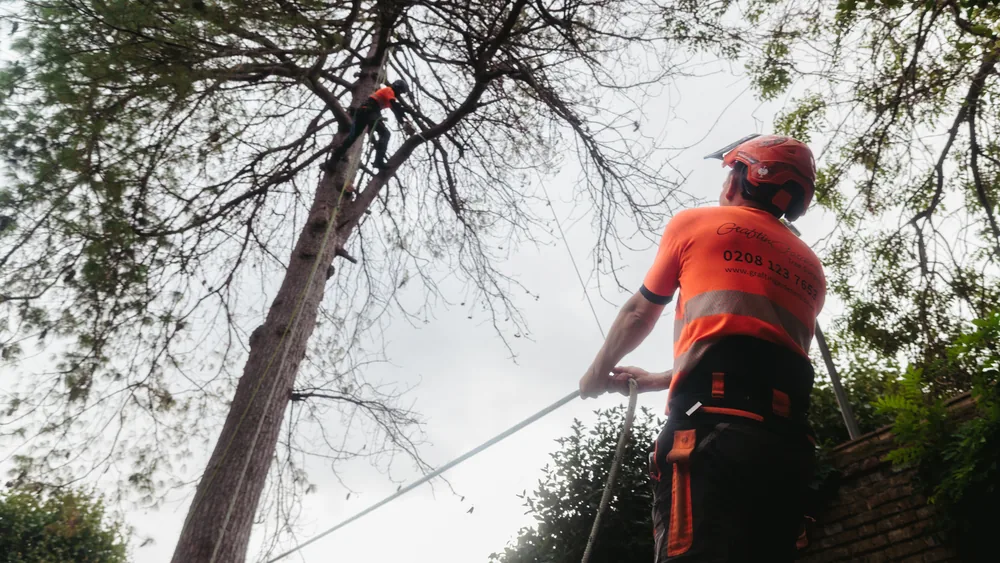
I’ve noticed a lot of UK websites recommend November as a quiet and cheaper month to book tree work, but in reality early November is still the tail end of our busiest period, with most companies’ diaries full of work that was booked back in September and October ahead of the winter pruning season and the storms.
Why Tree Removal Can Cost Less Once the Leaves Have Fallen
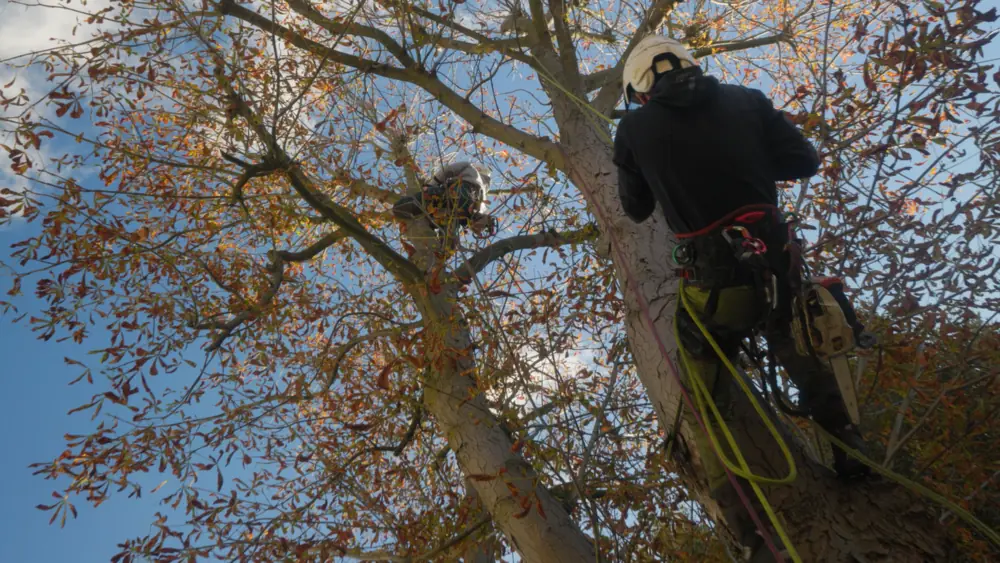
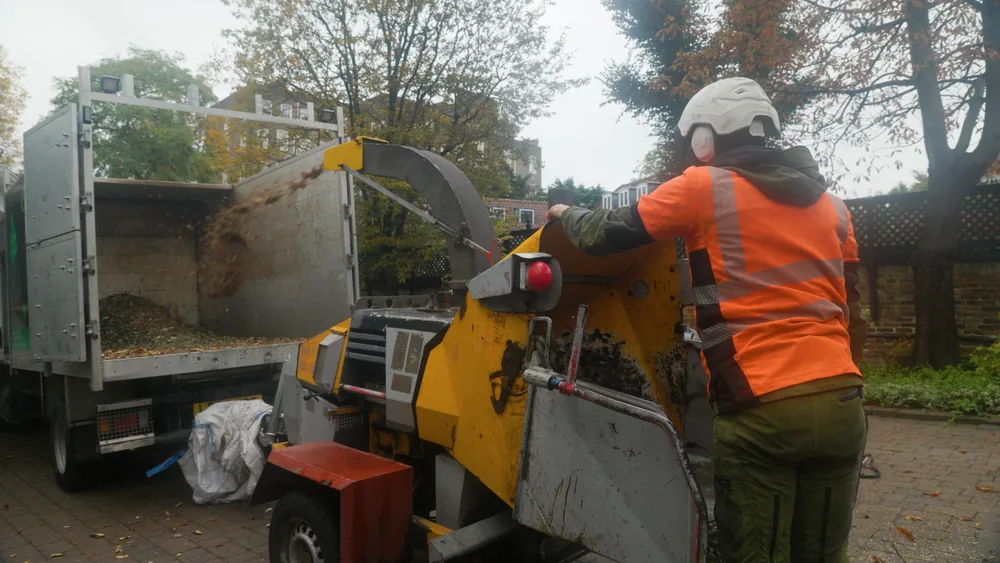
Essentially, because once a tree has lost its leaves, there’s less material to chip and take away; the climber and ground crew can see the tree’s structure and the drop zone clearly, the sections being lowered are lighter on the rigging, and cooler weather means the team doesn’t tire as quickly as it would in the summer heat. When we remove a tree, we’re cutting up and taking away everything it carries, so the leaves make more of a difference than most people expect. A mature tree in full leaf produces much more brash to feed through the chipper and load onto the lorry, and with the crown bare, our climbers can read the limbs and spot hazards from the ground before the climb even starts. Sections also tend to swing more predictably on the lowering ropes without a canopy of leaves catching the wind.
The Downsides of Removing a Tree in Winter
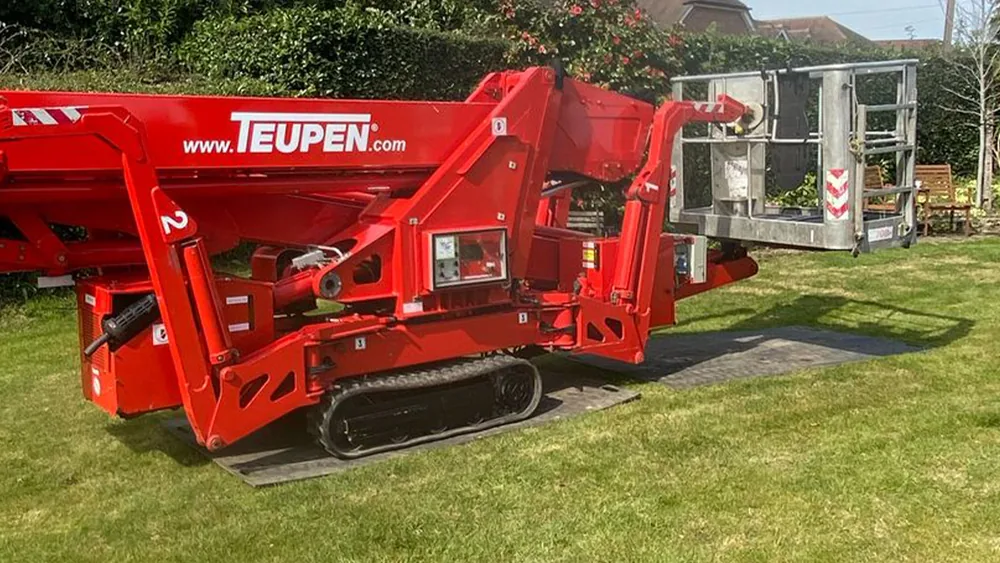
Winter weather can slow a job down or stop it altogether. High winds, lightning and heavy rain can make climbing too dangerous, wet limbs become slippery, and a waterlogged lawn may need ground protection mats laid before any heavy machinery can cross it, all of which adds time to the job. I often read on American websites that frozen ground protects your lawn during winter tree removal, but that rarely applies in London, where the ground in January is far more likely to be soft and waterlogged than frozen solid. Laying and lifting mats takes time that a dry lawn in June wouldn’t need, and when the weather means a job has to be rescheduled, that time has to be found somewhere else in the diary, which is one of the reasons the winter saving is modest rather than dramatic.
Is It Worth Waiting to Remove a Tree for a Cheaper Price?
It’s only worth waiting for a cheaper time of year if the tree is healthy and the job can genuinely wait. The tree will be the same size, in the same position and with the same access in January as it is in July, so the core cost of removing it barely changes, and any saving in the quieter season will likely be modest. In my experience, people are often surprised by how little the time of year changes a quote, but every removal needs the same climbers, ground crew, equipment, insurance and waste disposal whatever the month, and a company can only reduce its margin so far before it would be losing money on the job. We’ve explained where the money actually goes in our why tree surgeons are so expensive article, and our London tree surgeon price guide shows the price ranges we work to all year round.
The greater risk is actually waiting too long to remove a tree. A tree that’s dying, decaying or damaged won’t hold its condition while you wait for January, and if it becomes too unsafe to climb, that can turn a relatively straightforward dismantle into a more expensive job using a platform. If the tree is showing any signs of decline, I’d always recommend having it looked at sooner rather than later, and our guide on when to remove a tree covers the warning signs to look out for.
Is Summer a Cheaper Time to Remove a Tree?
The summer school holidays are the next quietest time after January. Lots of families are away, others want to enjoy their gardens without tree surgeons working in them, and heavy pruning is avoided in high temperatures, so tree companies tend to have more room in their diaries from late July through August. Long, dry summers can significantly affect trees, and if you’re worried about one of yours, our article on what drought does to trees covers the signs to look out for. Other school holidays, such as half terms and Easter, are usually a little quieter than term time, although nowhere near as quiet as the summer or Christmas holidays.
Can You Remove a Tree During Nesting Season?
In most cases, yes, but only after the tree has been thoroughly checked for nesting birds. In the UK, the bird nesting season runs from March to August, and under the Wildlife and Countryside Act 1981 it’s an offence to damage or destroy an active nest. So before any tree removal during those months, the tree must be inspected for nests, and if a nest is in use, the work has to wait until it is no longer active. There’s no law that blanket bans tree work during bird nesting season, which surprises a lot of people, and we’ve covered the law, the species and the month-by-month detail in our what months can you not cut trees article.
How Storms Affect Tree Removal Prices
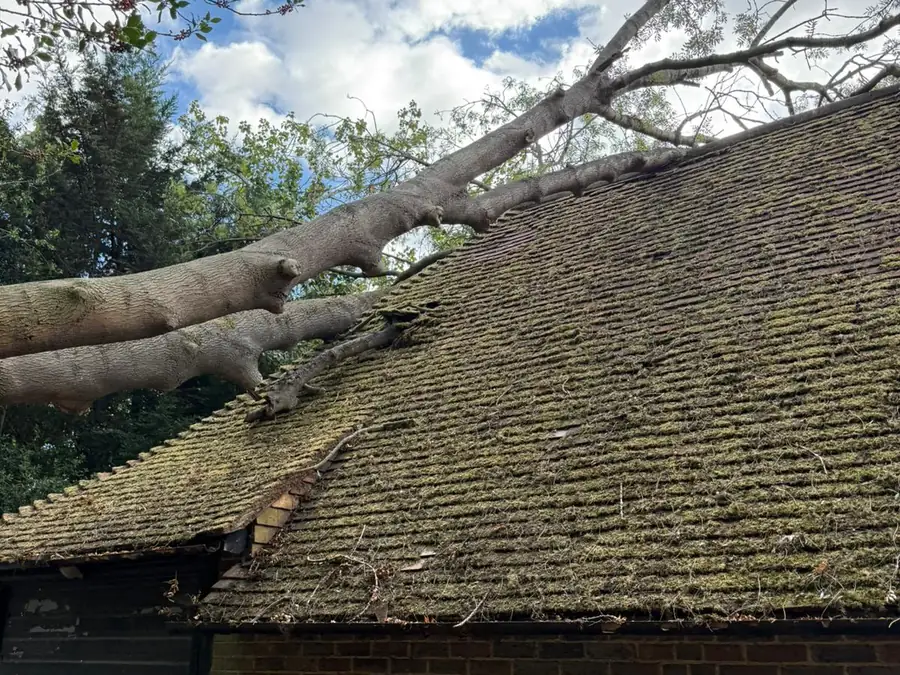
Storms can increase demand and, in turn, the price of tree removal overnight. The Met Office storm season runs from September to the end of August the following year, and recent seasons have seen named storms in October, January, April and even August, so emergency tree work can come in at any time of year. It’s no surprise that when a tree comes down on a roof, a car, or across a road, time is of the essence, and a rapid response team needs to be dispatched as soon as possible. Emergency call-outs always cost more than planned work, whatever the month. A bad storm in January can fill up tree companies’ diaries across London very quickly, so the quiet-season pricing I’ve described only really applies to work where you can choose the timing. If you’ve got a tree that’s come down or is in a dangerous condition right now, don’t wait for the quiet season, call our emergency tree work team today.
If you’d like a price for removing a tree, call 0208 123 7653 or request a free quote and we’ll give you a fixed written price for your tree removal with no obligation. If your job would be better done in the quieter months, we’ll tell you.
Cheapest Time for Tree Removal FAQs
Is tree removal cheaper in winter?
Not for the whole of winter, no. I’d say late November and December do tend to be quiet, but that’s mostly because a lot of companies push their non-urgent work into the new year over Christmas, so from my own experience the most competitive prices are usually found in January and the first part of February, and if you book in early November you’re still in the busy autumn period, so it probably won’t save you anything.
What is the most expensive time of year for tree removal?
From my experience it’s from September through to early November, as that’s when most London tree companies are booked up ahead of the winter pruning season and the storms. Emergency work is a bit different, because if a tree is dangerous and can’t wait, it’s going to cost more than a planned removal regardless of what month it is.
How far ahead should I book a tree removal?
In January you can often be booked in within days, but from September to early November most companies are booked further ahead, so it’s worth getting quotes early. If the tree has a Tree Preservation Order or is in a conservation area, allow for council consent too, as a TPO application can take up to eight weeks and a conservation area notice six weeks.
Can a tree be removed in frost or snow?
It really just depends on how bad the conditions are. A light frost first thing in the morning isn’t a problem for us, but once the stem and the ropes start icing up, or there’s a lot of snow sitting in the crown, it becomes a whole different story. Icy stems and limbs increase the risk of slipping, and heavy snow-laden branches can snap without warning. So on days like that, we’d rather rebook the job than put anyone at risk.
Will a tree surgeon remove a tree over Christmas?
Most won’t for routine work. Many companies push non-urgent jobs into the new year so staff can have time off and so they don’t disturb neighbours over the holidays. Emergency tree work carries on regardless, as does work away from homes, such as site and land clearances.
Article was written by Adam Rybinski · Company Director · GraftinGardeners Ltd · Published November 2026
Article Source: https://www.graftingardeners.co.uk/cheapest-time-of-year-for-tree-removal/